
September 2026
The quick answer
Most professional painters follow this order: ceiling first, then trim, then walls. In other words, yes, pros usually paint the trim before the walls. The logic is simple. Painting top to bottom keeps drips from landing on finished surfaces, and it is much easier to cut a clean wall line against dry trim than to tape and cut a perfect line on narrow trim against a finished wall.
There is no single law of painting, and some painters do walls first in certain situations. But if you want the method that produces clean results with the least frustration, ceiling, trim, walls is the order to follow.
Step 1: Ceiling
The ceiling always comes first. Rolling a ceiling throws a fine mist of paint spatter, and some will inevitably land on the top of the walls and trim. If you paint the ceiling last, you risk speckling surfaces that are already finished. Painting it first means any splatter gets covered later.
Cut in along the edge where the ceiling meets the wall, then roll the ceiling in manageable sections, keeping a wet edge to avoid lap marks. It is fine if a little ceiling paint goes onto the wall; the wall color will cover it.
Step 2: Trim
Next come baseboards, door and window casings, crown molding and doors. Trim is typically painted in a semi-gloss or satin enamel that is more durable and easier to clean than wall paint.
Here is the key: when painting trim, you do not need to be perfect where it meets the wall. Let the trim paint slightly overlap onto the wall. Once the trim is dry, you will cut the wall color down to the trim and cover that overlap. That is much faster than trying to keep trim paint perfectly off the wall.
Prep matters. Before painting trim, fill nail holes, caulk the gap between trim and wall, and lightly sand glossy old finishes so the new paint grips. Caulked joints are a big part of why a professional job looks so crisp.
Step 3: Walls
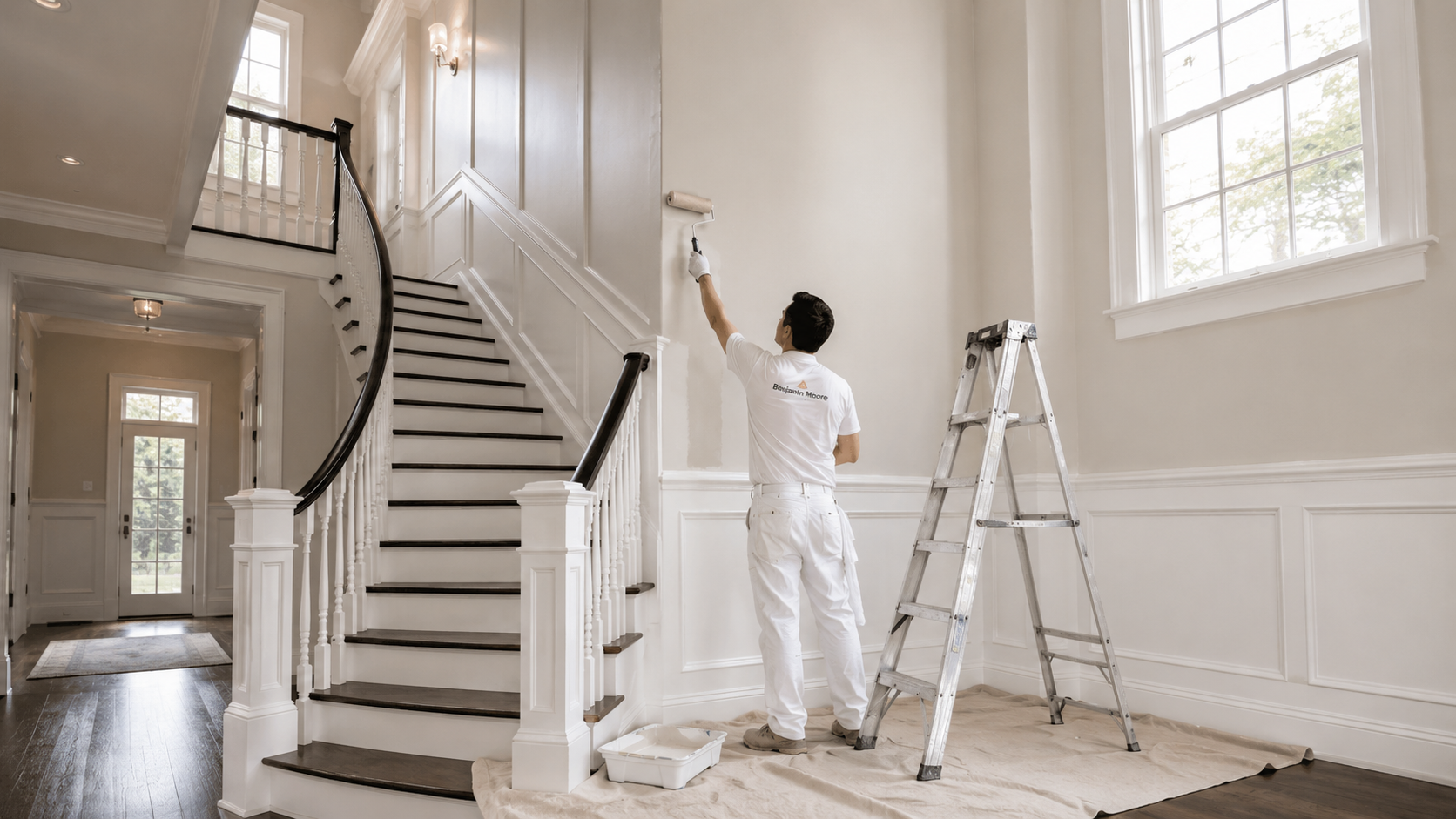
Once the trim is fully dry, painters tape it, or experienced painters simply cut in freehand with a quality angled brush, and paint the walls. Cutting a straight line on a wide, flat wall surface against a hard trim edge is much easier than the reverse.
If you use tape, apply it to the dry trim, press the edge firmly, and remove it while the wall paint is still slightly wet at a 45-degree angle for the cleanest line. Leaving tape on too long can peel paint or leave a ragged edge.
Why not walls first?
Some people prefer to paint walls first and then trim, arguing that taping the walls is easier. The problem is that trim is narrow. Painting it with a brush right against a finished wall demands a very steady hand, and any slip lands enamel on your new wall color. Glossy trim paint is also harder to cover with flat wall paint than the other way around.
There are exceptions. In new construction, where trim is often sprayed before installation, or when only the walls are being repainted and the trim is in good shape, walls may be the only thing painted at all.
What about doors and windows?
Doors are usually painted along with the trim. Remove hardware when possible, paint panels first, then rails and stiles, and leave the door slightly open while drying. Windows take patience: paint the sashes and muntins carefully, and move the sashes slightly while drying so they do not stick shut.
Common mistakes to avoid
Skipping caulk and filler on trim. Painting over dust or grease. Using flat wall paint on trim. Rushing to tape trim before it is fully dry. Not stirring paint or mixing gallons, which can cause slight color differences between walls. Each of these shows up later as cracks, peeling or uneven color.
Let the pros handle it
Following the right order is only part of a great result. Prep, quality materials and experience with a brush are what make lines sharp and finishes last. AKM Painting Corp has 10 years of experience painting interiors across Massachusetts and is fully insured. Call (781) 261-0947 or request a free estimate and let our crew make your rooms look their best.
Learn more about our residential painting services. Interior and exterior painting for homes across New England and surrounding communities.
Ready to start your project?
Get Free Estimate